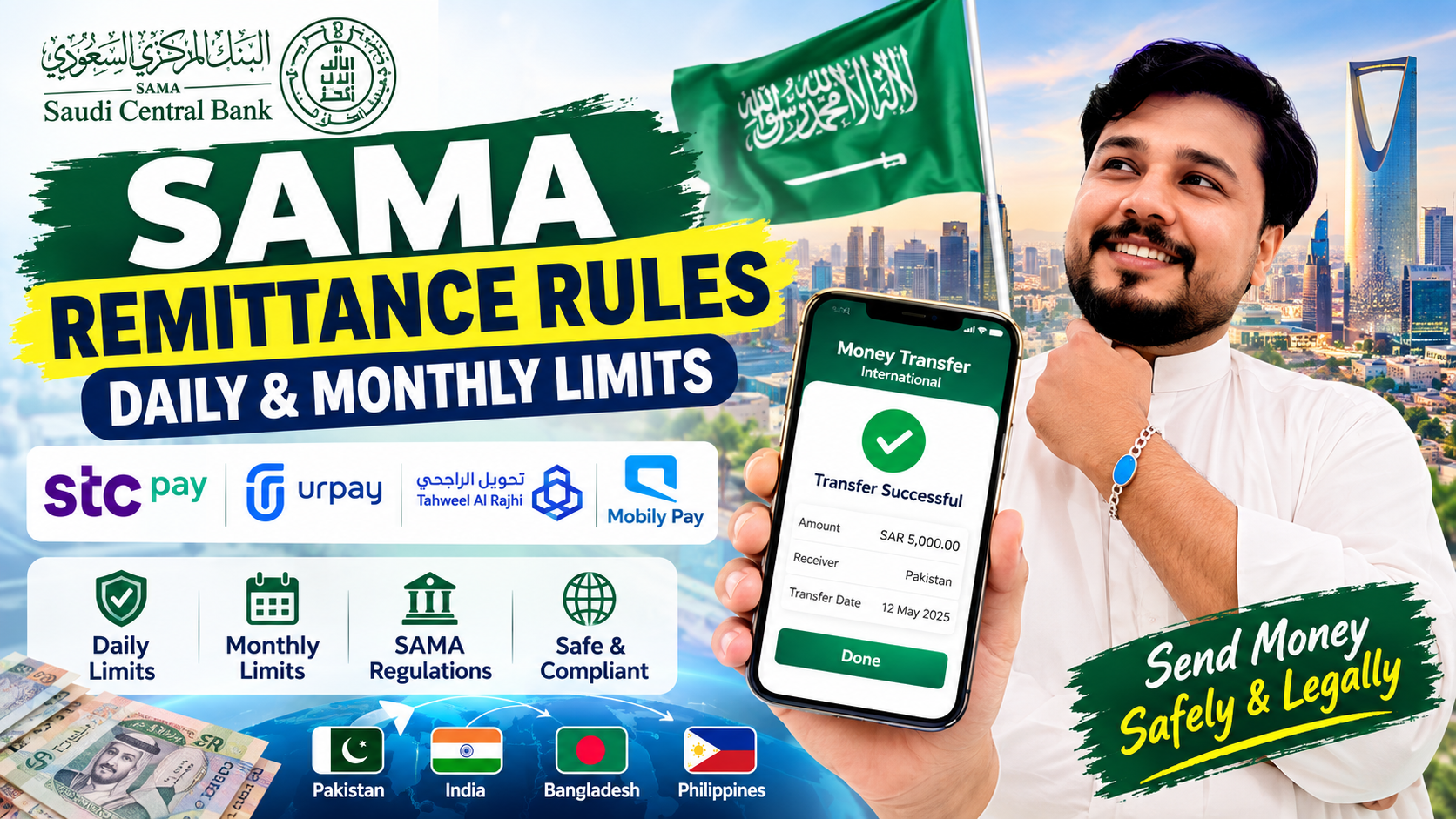
Understanding the official SAMA Remittance Rules KSA is essential for expatriates living and working in Saudi Arabia to ensure their cross-border money transfers remain smooth, legal, and free from compliance holds. The Saudi Central Bank (SAMA) enforces comprehensive financial regulations across all commercial banks, money exchange houses, and digital payment wallets such as STC Pay, Urpay, and Mobily Pay to secure international financial transactions and protect user assets.
Key Objectives of SAMA Foreign Remittance Regulations
The regulatory framework established by the Saudi Central Bank serves several crucial financial purposes for both individual expatriate senders and the national banking infrastructure in KSA:
- Financial Transparency: Ensuring all international fund transfers match verified income records linked directly to the sender’s registered Iqama number.
- Consumer Balance Protection: Safeguarding digital wallet balances and commercial bank deposits against fraudulent unauthorized access and online scams.
- Anti-Money Laundering Compliance: Preventing illicit cross-border financial flows through automated transaction monitoring systems connected directly to SAMA Remittance Rules KSA compliance protocols.
SAMA Transfer Thresholds and Verification Tiers in 2026
Under current Saudi banking guidelines, international remittance volume caps are structured based on your account verification level, employment status, and declared monthly salary income:
- Digital Wallet Monthly Limits: Licensed digital payment applications enforce a standard rolling limit of SAR 20,000 per month for fully verified retail users.
- Commercial Bank Daily Transfer Caps: Traditional bank accounts at institutions like Al Rajhi Bank, SNB, or Alinma Bank allow higher daily limits ranging from SAR 20,000 to SAR 50,000+, provided the amounts align with verified employment salary certificates.
- Unverified Account Restrictions: Financial accounts without updated salary details or active Absher profiles face immediate transfer limits or temporary service suspensions.
Essential Compliance Tips to Avoid Remittance Account Holds
To avoid unexpected holds or security reviews on your outgoing international remittances under SAMA Remittance Rules KSA, follow these essential operational practices:
- Keep Absher & Iqama Profiles Updated: Always ensure your legal ID details are renewed and synchronized across all banking applications before initiating high-value money transfers.
- Transfer Exclusively From Salary Accounts: Route cross-border remittances through your primary salary account or verified mobile wallet tied directly to your residency identity.
- Avoid Unverified Cash Deposits: Do not permit third parties to deposit cash sums into your bank account for overseas transfers, as this triggers strict anti-money laundering investigations.
- Verify Beneficiary Legal Names: Always check that the recipient’s full legal name matches their foreign bank account or government ID exactly to prevent clearance delays.
How Expatriates Can Request Higher Transfer Thresholds
If you need to send a legitimate sum exceeding standard digital wallet allowances (such as for property purchases, medical emergencies, or family settlements), you can request an extended transaction threshold:
- Provide Employment Verification: Submit an updated salary certificate verified by the Chamber of Commerce through your bank’s online portal.
- Submit Supporting Source Documents: For non-salary funds, provide verifiable legal documentation such as real estate sale contracts, end-of-service benefit statements, or dividend certificates.
- Use Official Commercial Banking Channels: Process large-value international transactions directly through primary bank branches rather than retail digital wallets.
Stay updated on live daily exchange rates, digital wallet fee comparisons, and Saudi financial updates at RiyalGhar before executing your next international transfer.
Frequently Asked Questions (FAQs)
Does SAMA charge a tax on international remittances from Saudi Arabia?
No, Saudi Arabia does not impose a direct remittance tax on foreign worker money transfers. However, local transfer processing fees charged by banks and wallets are subject to the standard 15% Value Added Tax (VAT).
What happens if I send an amount higher than my salary?
Transfers significantly exceeding your registered monthly salary trigger automated compliance flags under SAMA Remittance Rules KSA, requiring proof of funds documentation before the transaction is cleared.
Can I send money internationally if my Iqama is expired?
No, SAMA regulations strictly mandate that all outgoing international money transfer features must be frozen immediately upon Iqama expiration until account identity details are fully updated in the bank’s database.