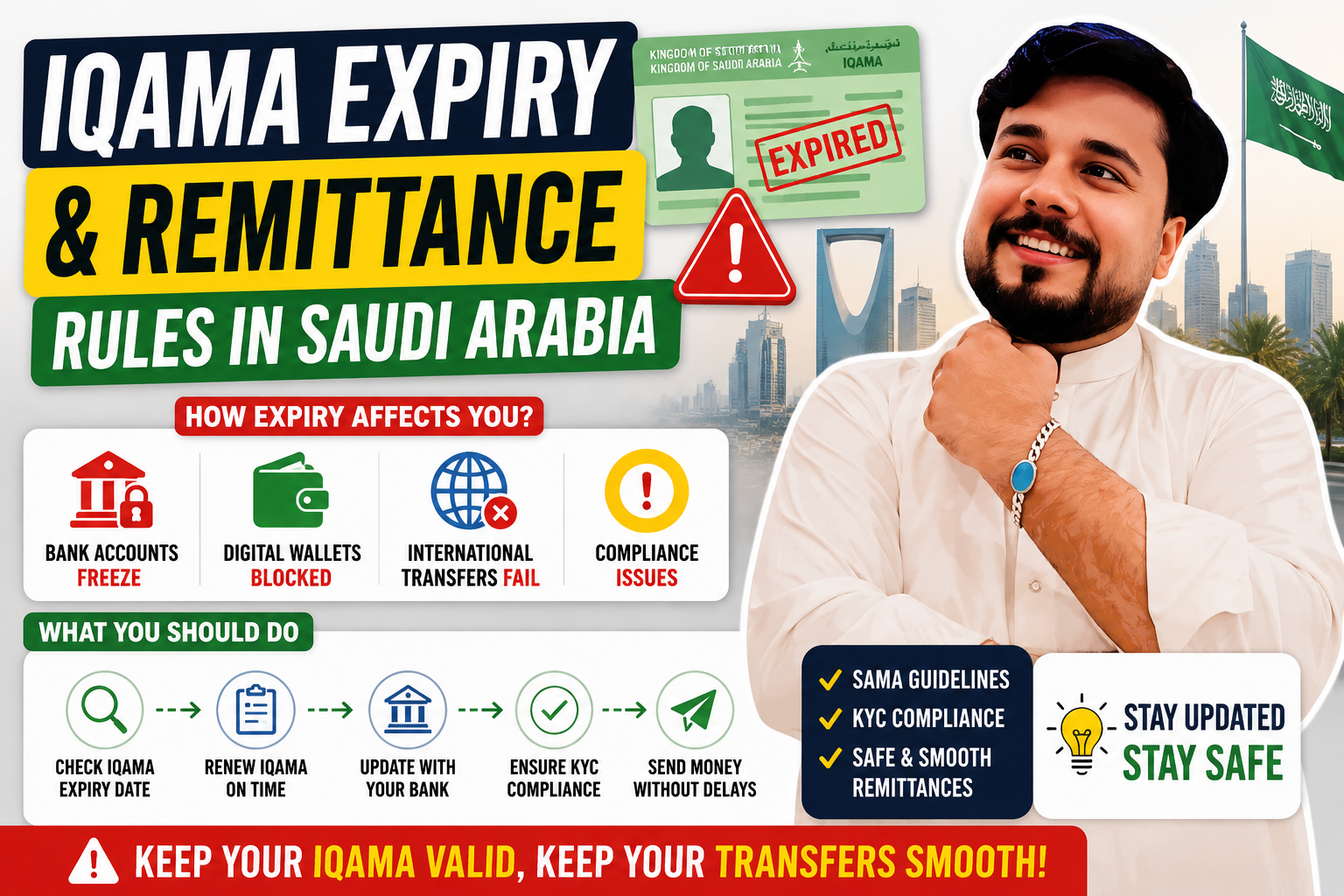
Understanding Iqama Expiry Remittance Rules in Saudi Arabia is essential for every expatriate worker looking to avoid sudden bank account freezes or failed international money transfers. Under Saudi Central Bank (SAMA) guidelines, foreign financial institutions enforce strict Know Your Customer (KYC) compliance policies. This guide explains how an expired Iqama impacts your bank accounts, digital wallets, and international transfers, along with steps to update your status.
Can You Send Money with an Expired Iqama?
According to SAMA monetary regulations, financial accounts are strictly tied to valid resident identity records (Iqama):
- Digital Wallets (STC Pay, Urpay, Mobily Pay): When your Iqama expires, digital wallet applications temporarily restrict outgoing international transfers once the grace period ends. You can typically view your wallet balance, but outgoing remittances are disabled until identity verification is renewed.
- Traditional Bank Accounts (Al Rajhi, SNB, Alinma): Saudi banks provide a limited grace period (usually up to 90 days depending on the institution) before freezing debit cards, online banking, and outgoing wire transfers.
What Happens to Your Money When Your Account Is Frozen?
A frozen account due to Iqama expiration does not mean your funds are lost. Your remaining account balance remains secure within the bank or digital wallet network. However, you will be unable to process withdrawals, pay SADAD bills, or initiate overseas remittances until your renewed Iqama details are updated in the bank system.
How to Update Your Iqama Status in Banking Apps
Once your sponsor (Kafeel) or employer renews your Iqama through the Absher / Muqeem portal, you can update your banking records digitally without visiting a physical branch:
- Via Mobile Banking Apps: Log in to your banking app, navigate to Settings > ID Information / KYC Update, and select Update ID Expiry Date. The system automatically verifies your new details with the Absher database.
- Via Digital Wallets (Urpay / STC Pay): Open the app profile settings, click on ID Verification / Customer Information, and confirm the instant Absher integration prompt.
- Via Phone Banking (IVR): Many banks allow automated KYC renewal through registered mobile numbers via interactive voice response systems.
Grace Periods and Final Exit Remittances
For expatriates leaving Saudi Arabia permanently on a Final Exit Visa (Khuruj Niha’i):
- Your bank account remains operational during the validity period of your final exit visa.
- Ensure all final remittances and wallet balance transfers are completed prior to the cancellation of your residence permit.
- If an account is frozen after receiving a Final Exit Visa, you must visit a local bank branch with your original passport, final exit printout, and old Iqama details to process a manual balance payout.
For real-time exchange rates, digital finance guides, and Saudi banking news, visit RiyalGhar.
Frequently Asked Questions (FAQs)
How long is the bank grace period after Iqama expiry?
Most commercial banks in Saudi Arabia allow a grace period ranging from 30 to 90 days after Iqama expiration before restricting transactional services. However, digital wallet limits may enforce stricter verification timers.
Can I transfer money from my wallet if my Iqama status is pending renewal?
No, if your digital wallet’s internal KYC verification counter expires, outgoing international remittance options are automatically paused until the renewed Iqama data synchronizes from Absher.
How long does it take for a bank account to unfreeze after updating Iqama?
Digital updates through mobile banking apps or Absher instant verification unfreeze accounts almost immediately or within 24 business hours.